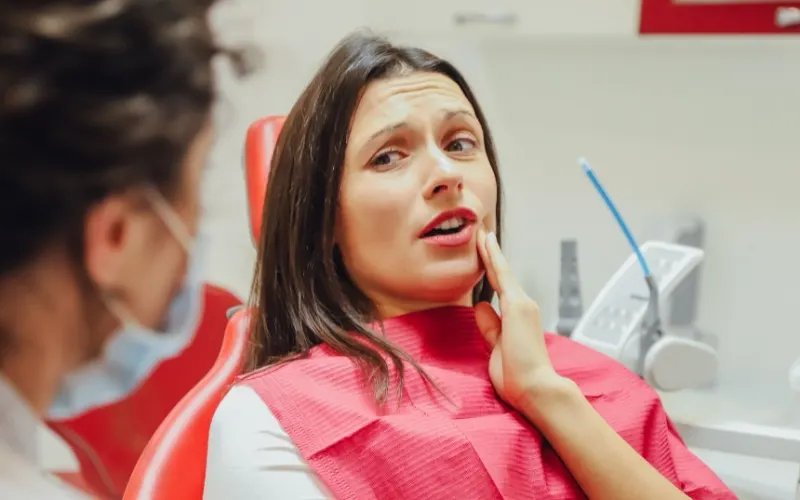
If a breath of cold air on a November morning or a sip of ice water sends a sharp zing through your teeth, you're not alone — and it's worth paying attention to. As a Dentist Howell patients see for exactly this complaint every winter, Riverpark Dental of Howell can tell you that cold sensitivity is usually manageable, but it is also one of the earliest signals that something in a tooth or gumline has changed. Here's what causes it, what you can do at home, and when it's time to get it checked.
Why cold weather makes teeth sensitive
Healthy teeth are covered by enamel above the gumline and by gum tissue around the roots. Underneath both is dentin, a layer full of microscopic tubes that lead toward the nerve. When dentin is exposed, cold travels down those tubes quickly and the nerve reacts with a short, sharp pain.
Winter makes this more noticeable for a few reasons:
- Cold air hits teeth directly. Breathing through your mouth while you scrape the windshield, walk the dog or wait at the bus stop on Route 9 exposes teeth to temperatures far colder than anything you'd normally drink.
- Teeth expand and contract with temperature. Moving quickly between a heated car or home and freezing air makes enamel and fillings expand and contract slightly. Over time this can widen tiny cracks you never noticed.
- More hot-and-cold combinations. Hot coffee on the way to work, then a cold drink at lunch — quick swings in temperature are exactly what sensitive teeth dislike.
- Dry indoor air. Heated homes dry out the mouth, and saliva is one of the things that protects enamel.
The most common causes of tooth sensitivity
Cold weather usually reveals sensitivity rather than creating it. The underlying cause is what decides the fix:
- Gum recession. When gums pull back, the root surface — which has no enamel — is exposed. Brushing too hard, gum disease and simple aging can all play a part.
- Worn enamel. Acidic drinks (soda, sports drinks, citrus, wine), acid reflux and aggressive brushing slowly thin the enamel.
- Grinding or clenching. Many people clench more during stressful months, and the holiday season is no exception. Grinding wears enamel and can crack teeth.
- A cavity or a leaking filling. Decay that has reached the dentin, or an old filling with a gap at its edge, often shows up first as sensitivity to cold or sweets.
- A cracked tooth. Pain when you bite down and release, or a sharp twinge with cold on one specific tooth, can point to a crack.
- Recent whitening. Temporary sensitivity after whitening is common and usually fades within a few days.
What you can do at home this winter
For mild sensitivity that comes and goes, a few simple changes often help:
- Switch to a toothpaste made for sensitive teeth and use it twice a day for at least a couple of weeks — these products take time to work. Some people also spread a little on the sensitive area before bed and don't rinse it off.
- Use a soft-bristled toothbrush and a gentle hand. Hard scrubbing wears enamel and pushes gums back. Let the bristles do the work.
- Breathe through your nose outside, and pull a scarf over your mouth on the coldest, windiest days.
- Go easy on acidic drinks. If you have them, drink with a meal, use a straw for cold drinks, and rinse with water afterward. Wait a while before brushing after something acidic.
- Avoid extreme temperature swings. Let hot coffee cool a little, and skip chewing ice.
- Run a humidifier if your heated home leaves your mouth dry in the morning, and keep drinking water through the day.
If sensitivity is improving within a couple of weeks, those habits are probably doing the job. If it isn't, it's time for an exam.
When to see a Dentist Howell office about sensitive teeth
Book a visit if any of these sound familiar:
- Sensitivity that lasts more than two weeks, or is getting worse
- Pain that lingers for more than a few seconds after the cold is gone
- Sensitivity in one specific tooth rather than across your whole mouth
- Pain when biting down, especially on one side
- Gums that look like they are pulling back, or teeth that look longer than they used to
- A dark spot, a rough edge or a chip you can feel with your tongue
Call right away if you have throbbing pain, swelling, a bad taste, or pain that wakes you at night — those can be signs that the nerve is involved. We hold time every day for dental emergencies and we're open every Sunday from 9 am to 3 pm.
How we treat tooth sensitivity at Riverpark Dental of Howell
The first step is finding the cause, not just covering the symptom. At your exam we look at the tooth with digital X-rays (up to 80% less radiation than traditional film) and intraoral camera photos, so you can see what we see. Depending on what we find, treatment may include:
- Fluoride treatment to strengthen enamel and reduce sensitivity in exposed areas.
- Bonding — a thin layer of tooth-colored material placed over an exposed root surface or a worn spot.
- A tooth-colored filling to repair a cavity or replace a leaking old filling. See dental fillings in Howell.
- A crown when a tooth is cracked or too weak to hold a filling, which protects it from splitting. Learn about crowns and bridges.
- A root canal if the nerve itself is inflamed or infected. It relieves the pain and lets you keep the tooth — read about root canals.
We'll explain what we find in plain language and give you a written estimate before any treatment. Nothing is done without your OK.
Prevention: the checkup that catches it early
Most of the causes of sensitivity — early recession, a small cavity, a filling starting to leak, wear from grinding — are easier and less expensive to fix when they are caught early. Regular cleanings and exams are when that happens.
Late fall is also a smart time to come in for another reason: many dental plans reset on January 1. Riverpark Dental of Howell is in-network with 32 PPO plans, and our coordinators check your remaining benefits before your visit. If you don't have insurance, our Adult Complete membership plan is $295 a year and includes two exams with routine X-rays, two cleanings and an emergency exam.
We're at 4034 US-9 in Howell, an easy drive from Farmingdale, Freehold, Jackson and Lakewood. Call (732) 751-4028 or book online — including Sunday appointments.
Frequently asked questions
Why do my teeth hurt when I breathe in cold air?
Cold air reaches dentin that has lost its protective covering — usually from gum recession or worn enamel — and the cold travels through tiny tubes in the dentin to the nerve. Breathing through your nose outdoors and using a toothpaste for sensitive teeth often helps, but sensitivity that lasts more than two weeks should be checked.
Is tooth sensitivity in winter a sign of a cavity?
It can be. Sensitivity to cold or sweets in one particular tooth is a common early sign of a cavity or a leaking filling. Sensitivity spread across many teeth is more often from recession or enamel wear. An exam with digital X-rays tells the difference.
How long does it take sensitive toothpaste to work?
Usually a couple of weeks of brushing twice a day. If you see no improvement after that, or the pain is getting worse, book an exam so we can look for a cause that toothpaste can't fix.
When should I see a Dentist Howell office for sensitive teeth?
Book a visit if sensitivity lasts more than two weeks, lingers after the cold is gone, is limited to one tooth, or hurts when you bite. Call the same day for throbbing pain, swelling or pain that wakes you at night — Riverpark Dental of Howell reserves emergency time every day and is open Sundays.
Can grinding my teeth cause sensitivity?
Yes. Grinding and clenching wear down enamel, can cause small cracks, and may contribute to gum recession — all of which expose sensitive dentin. If you wake with sore jaw muscles or worn-looking teeth, mention it at your exam so we can check for damage.
Related treatment
Preventative Dentistry in Howell