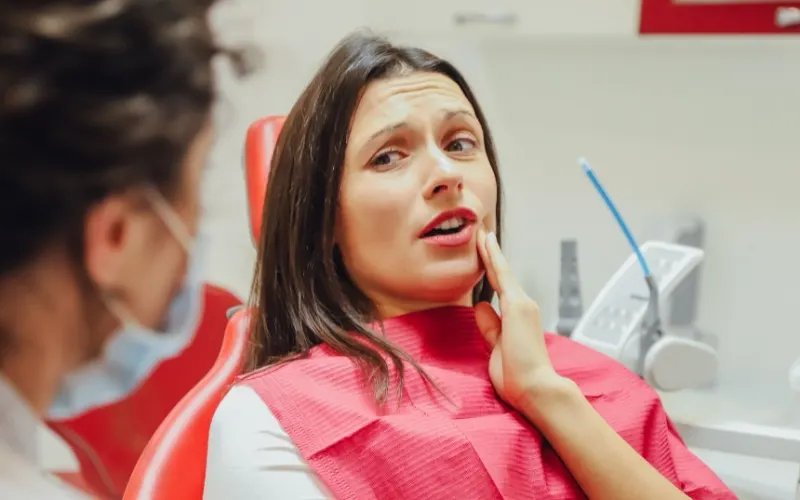

When a cold or the flu works its way through Howell schools and offices, your teeth are usually the last thing on your mind. But the things that help you feel better — cough drops, decongestants, sports drinks, extra hours in bed — can quietly raise your risk of cavities and gum irritation. As a Dentist Howell families visit through every cold and flu season, Riverpark Dental of Howell put together the simple habits that protect your smile while you recover, plus how to tell a sinus ache from a real tooth problem.
How being sick affects your mouth
A few days of illness rarely causes lasting damage on its own. The problem is the combination of habits that come with it:
- Dry mouth. A stuffy nose means breathing through your mouth, especially at night, and many decongestants and antihistamines reduce saliva. Saliva neutralizes acid and washes food away, so a dry mouth is more vulnerable to cavities.
- Sugar around the clock. Cough drops, throat lozenges, syrups, juice and sports drinks often contain sugar, and they're used every few hours — which keeps teeth under almost constant acid attack.
- Acid from vomiting or reflux. Stomach acid is strong enough to soften enamel.
- Skipped brushing. When you feel terrible, the evening routine is the first thing to go.
The good news: a few small adjustments cover nearly all of it.
Smart choices for cough drops, medicine and drinks
You don't need to tough it out without relief. Just choose and use comforts with your teeth in mind:
- Look for sugar-free cough drops and lozenges. Many sugar-free options are sweetened with xylitol or other sweeteners that bacteria can't use the same way they use sugar. Check the label.
- Take liquid medicine with a meal when the directions allow it, and rinse with water afterward. Many children's syrups are sweetened, so brushing after the bedtime dose matters.
- Choose water first. Sports drinks and juice can help when you're dehydrated, but sip them with meals rather than all day, and follow with plain water.
- Warm tea is fine — just go easy on honey or sugar, and rinse with water afterward.
- Sip water through the day and keep a glass by the bed. It's the easiest way to fight dry mouth from congestion and medication.
Always follow the dosing directions on any medicine, and check with your doctor or pharmacist about which products are right for you or your child.
If you're sick to your stomach: don't brush right away
After vomiting, your instinct is to brush immediately. Wait. Stomach acid temporarily softens enamel, and brushing straight away can scrub some of it off. Instead:
- Rinse your mouth with water, or with a teaspoon of baking soda dissolved in a cup of water to help neutralize the acid.
- Wait about 30 minutes, then brush gently with a soft toothbrush and fluoride toothpaste.
The same applies after a bout of acid reflux, which often flares up when you're lying down more than usual.
Your toothbrush after a cold or the flu
Toothbrushes should be replaced every three to four months anyway, or sooner if the bristles are frayed. Many families also start fresh with a new brush once they've recovered from an illness — an easy habit, and a good reminder if it's been a while.
While someone in the house is sick, store their toothbrush upright to air-dry, apart from everyone else's, and don't share toothpaste tubes in a way that lets brushes touch. Keep brushing twice a day even when you feel run down; two minutes with fluoride toothpaste is enough.
Sinus pain or toothache? How a Dentist Howell office tells the difference
The roots of your upper back teeth sit right below the maxillary sinuses. When those sinuses are inflamed and full of pressure during a cold or sinus infection, the pain can feel exactly like a toothache.
It's more likely your sinuses if:
- Several upper back teeth ache at once, on one or both sides
- The ache gets worse when you bend over, lie down or jump
- You also have congestion, facial pressure around the cheeks or eyes, or post-nasal drip
- It improves as your cold clears up
It's more likely a tooth problem if:
- The pain is in one specific tooth, upper or lower
- It's triggered by biting, or by hot, cold or sweet foods
- It lingers after the cold or sinus symptoms are gone
- There's swelling of the gum or face, a bad taste, or a pimple-like bump on the gum
If you're not sure, we can check. An exam with digital X-rays (up to 80% less radiation than traditional film) shows whether the tooth and its root are healthy. If a tooth is the cause, it may need a filling or, if the nerve is infected, a root canal. Facial swelling, fever with tooth pain, or pain that keeps you up at night needs prompt attention — call us and we'll see you as an emergency visit, including on Sundays from 9 am to 3 pm.
Should you keep your dental appointment if you're sick?
If you have a fever, the flu or a bad cough, please call and reschedule your cleaning — it's better for your comfort and for other patients. Just call (732) 751-4028, and we'll find a new time once you're feeling better.
The exception is dental pain or swelling. Don't wait out a possible tooth infection — call and tell us what's going on, and we'll advise you on the next step.
Stay ahead of it this winter
A routine cleaning and exam before the worst of winter means any small problem is found while it's still small. It's also a good time to use your benefits: many plans reset January 1, and Riverpark Dental of Howell is in-network with 32 PPO plans. No insurance? Our membership plans cover two cleanings, two exams with X-rays and an emergency exam each year — $295 for adults and $199 for children 13 and under, which also includes a fluoride treatment.
We're at 4034 US-9 in Howell, convenient to Farmingdale, Freehold, Jackson and Lakewood. Book online — including Sunday appointments.
Frequently asked questions
Are cough drops bad for your teeth?
Regular cough drops are mostly sugar, and they dissolve slowly, so using them every hour or two keeps teeth bathed in sugar all day. Sugar-free lozenges are a better choice, and drinking water between them helps.
Should I replace my toothbrush after being sick?
Replacing your toothbrush every three to four months is the general rule, and many families also switch to a fresh brush after recovering from a cold or the flu. Store a sick person's brush upright and apart from others while they recover.
Can a sinus infection cause a toothache?
Yes. The upper back teeth sit just below the sinuses, so sinus pressure can make several upper teeth ache at once — often worse when you bend over. Pain in one specific tooth, pain when biting, or pain that lasts after the sinus symptoms clear points to a tooth problem instead.
When should I see a Dentist Howell office for tooth pain during a cold?
See us if the pain is in one tooth, if it's triggered by biting or by hot and cold, or if it doesn't go away when your cold does. Call the same day for facial swelling, a fever with tooth pain or pain that keeps you awake — Riverpark Dental of Howell reserves emergency time every day and is open Sundays.
Is it OK to go to a dental cleaning with a cold?
If you have a fever, the flu or a heavy cough, call (732) 751-4028 to reschedule — we'll find a new time once you're well. Dental pain or swelling is different: call us rather than waiting it out.
Related treatment
Preventative Dentistry in Howell