4034 US-9 Howell, NJ 07731
When a tooth becomes damaged from decay, fractures, or large fillings, restorative treatment is often necessary to protect it from further problems. During consultations, many patients hear about two possible options: a dental onlay or a dental crown. While both treatments restore strength and function, it is natural to wonder which option is more suitable before making a decision.
Most patients focus on three important concerns: how long the restoration will last, how strong it will be during daily use, and the financial considerations involved. These questions often arise when people experience tooth discomfort while enjoying meals at local restaurants around Howell Township or spending time with family at Thompson Lake Park.
Both restorations help protect damaged teeth and restore normal chewing ability. Around this stage of the discussion, many patients also hear about dental crowns as a common treatment for more extensive damage. Understanding the differences between these two solutions helps patients choose the option that fits their tooth condition, durability expectations, and long-term oral health goals.
What Is a Dental Onlay?
A dental onlay is a custom restoration used when a tooth has moderate damage but still retains enough healthy structure to avoid full coverage treatment. It is designed to repair and strengthen the tooth while preserving as much natural enamel as possible.
How Onlays Work
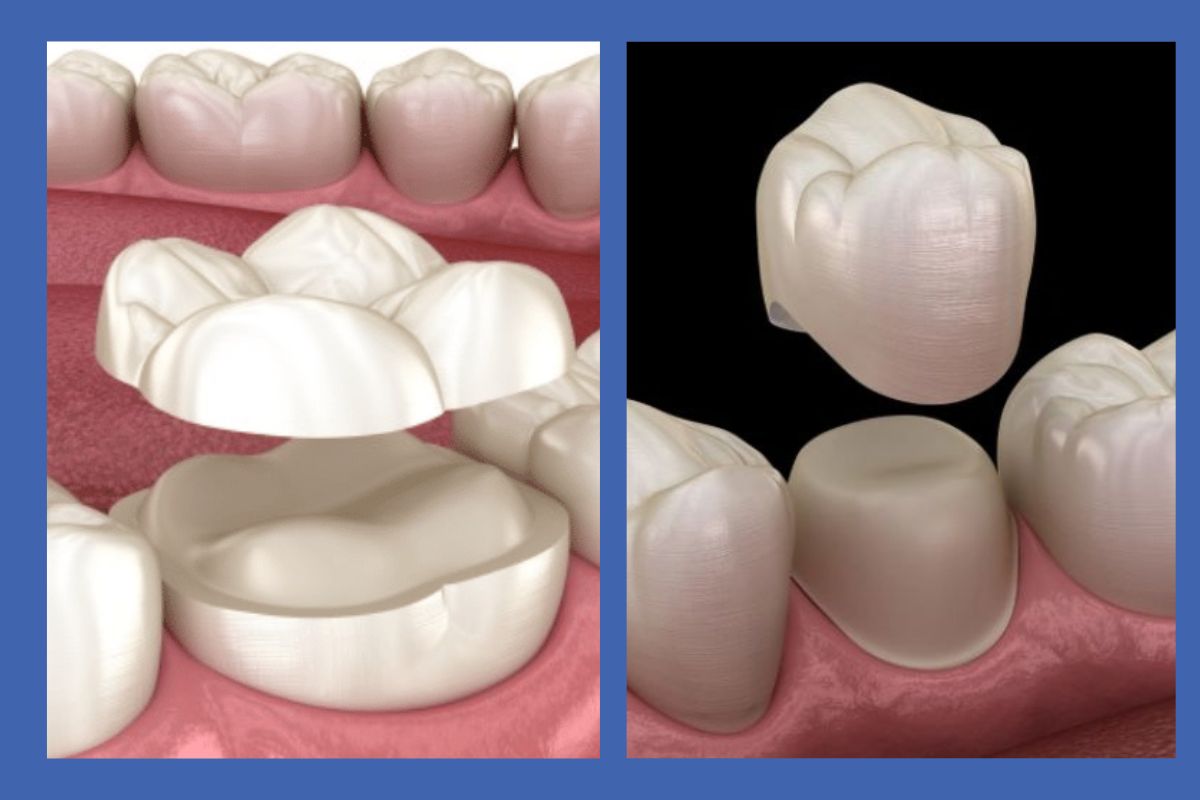
An onlay is carefully crafted in a dental laboratory after the tooth is prepared. It fits precisely over the chewing surface and may cover one or more cusps of the tooth. Because it only restores the damaged portion, it allows more of the natural tooth structure to remain intact compared to full coverage restorations.
This type of treatment is often used when a traditional filling is not strong enough to restore the tooth properly. The dentist removes damaged material and takes impressions so the onlay can be created to match the shape and color of the surrounding teeth.
Materials Used for Onlays
Onlays may be fabricated using different materials depending on the tooth’s location and functional needs:
- Porcelain
- Composite resin
- Gold (less common today)
Porcelain is commonly selected because it blends well with natural teeth and provides excellent durability for chewing surfaces.
When Dentists Recommend Onlays
Dentists may suggest an onlay in situations such as:
- Moderate tooth decay
- Cracked tooth without major structural damage
- Large failing fillings
- Strengthening weakened tooth structure
Patients in Howell often appreciate this option when the tooth still has enough natural structure to support a conservative restoration.
What Is a Dental Crown?
A dental crown is designed to restore teeth that have lost a significant amount of structure. Instead of covering only part of the tooth, it surrounds the entire visible portion above the gumline to provide full protection.
How Dental Crowns Restore Teeth
A crown works like a protective cap placed over the prepared tooth. It restores the tooth’s original shape and strength while allowing patients to chew comfortably again. Because it covers the entire surface, it helps stabilize teeth that are severely weakened or cracked.
Many patients rely on dental crowns in Howell when a tooth requires full structural reinforcement after extensive decay or damage.
Common Crown Materials
Several materials may be used to fabricate crowns:
- Porcelain
- Zirconia
- Porcelain fused to metal
- Gold alloy
Each material offers different advantages related to durability, appearance, and long-term function.
When Crowns Are Usually Recommended
Dentists often recommend crowns in cases such as:
- Severe tooth decay
- After root canal treatment
- Cracked or fractured teeth
- Large structural loss
Because crowns cover the entire tooth, they provide strong reinforcement for teeth that might otherwise require extraction.
Onlay vs Crown: Key Differences
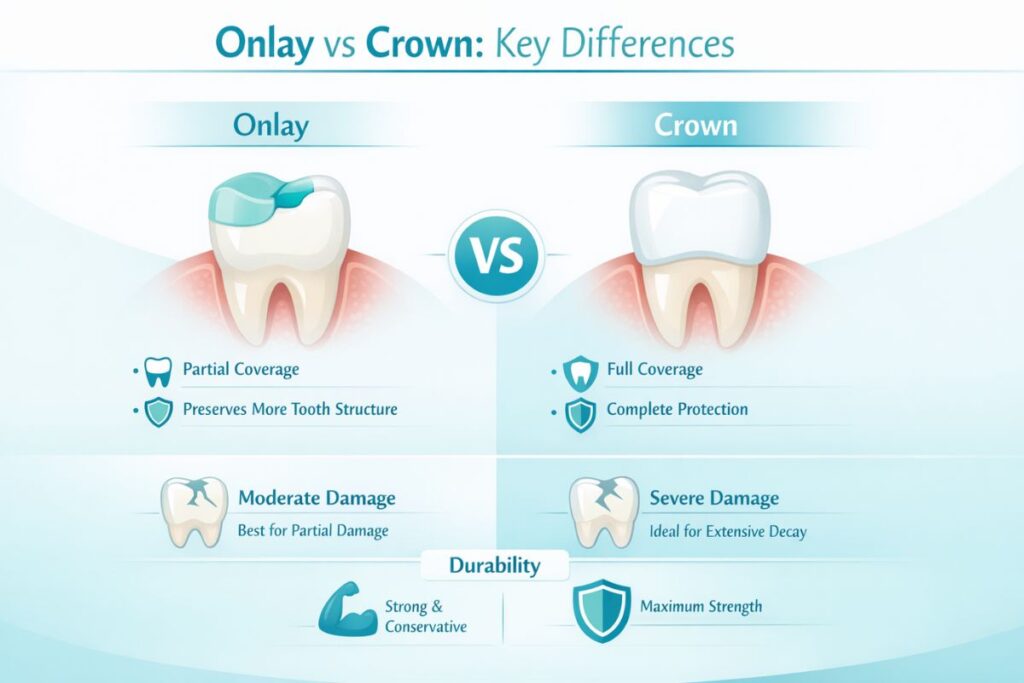
When patients compare restorative treatments, the main difference between an onlay and a crown comes down to how much of the tooth needs protection. Both restorations are designed to repair damaged teeth and restore normal chewing function, but they serve slightly different purposes depending on the severity of the damage.
An onlay is typically used when the damage affects only a portion of the tooth. It covers the chewing surface and sometimes one or more cusps while leaving the rest of the natural tooth intact. Because it restores only the damaged area, an onlay allows dentists to preserve more of the natural tooth structure. This approach works well when the remaining enamel is still strong enough to support the restoration.
A crown, however, provides complete protection for the tooth. Instead of covering only part of the tooth, it surrounds the entire visible portion above the gumline. This full coverage design helps reinforce teeth that have undergone extensive decay, fractures, or structural weakening. By covering the entire tooth, a crown distributes chewing pressure evenly and reduces the risk of further cracking or damage.
Durability is another important difference between the two restorations. Onlays are strong and can handle normal biting forces, making them suitable for teeth that still have sufficient structural support. Crowns, however, are designed to provide even greater strength and stability. Because they fully encase the tooth, they offer additional reinforcement that helps protect teeth that are more severely compromised.
The level of tooth damage also helps determine which restoration is recommended. Onlays are often used when the damage is moderate, and the tooth still retains a healthy base. Dental crowns in Howell are commonly recommended when a tooth has lost a larger portion of its structure or when it needs full protection to remain functional.
In many cases, both treatments require two dental visits. During the first appointment, the tooth is prepared, and impressions are taken so the restoration can be custom-fabricated. The final restoration is placed during the second visit once it has been crafted to match the tooth precisely.
For teeth that require maximum protection, crowns provide a reliable and long-lasting solution. Their full coverage design restores both strength and function, helping patients chew comfortably while protecting the tooth from further damage.
Cost Comparison: Onlay vs Crown
Several factors influence the overall cost of restorative treatments. The material selected for the restoration is one of the primary considerations. Porcelain and zirconia restorations typically require specialized laboratory fabrication, which contributes to the overall expense.
Laboratory work is another factor. Both onlays and crowns are custom-made to fit each patient’s tooth precisely, ensuring proper bite alignment and natural appearance.
Insurance coverage may also affect the total cost. Many dental insurance plans contribute toward restorative procedures when they are medically necessary to repair damaged teeth.
The complexity of the tooth plays a role as well. Teeth with extensive decay or structural damage may require additional preparation or supporting procedures before restoration.
Onlays may sometimes be slightly lower in price because they preserve more natural tooth structure and involve less extensive reshaping. Dentists may need to prepare more of the tooth because they must cover the entire tooth with a crown to ensure proper stability.
The location of the tooth also matters. Molars, which handle heavier chewing forces, often require stronger materials and more detailed preparation.
Patients in Howell often discuss these factors with their dentist to understand which treatment aligns best with their dental needs and long-term oral health goals.
Durability: Which Restoration Lasts Longer?
Dentists design both onlays and crowns to provide long-lasting protection when patients maintain them properly.
Onlays typically last between 10 and 15 years, although many can function longer with proper care. Their durability depends largely on the amount of remaining natural tooth structure and the patient’s chewing habits.
Crowns often provide even longer service. Many restorations remain functional for 15 to 20 years or more, particularly when made from durable materials such as zirconia or porcelain fused to metal.
The lifespan of either restoration depends on several factors:
- Oral hygiene habits
- Daily chewing forces
- Teeth grinding or clenching
- Regular dental checkups
Patients who maintain consistent brushing, flossing, and professional dental visits tend to experience the longest lifespan from their restorations.
With proper care, both treatments can provide years of reliable function and protection for damaged teeth.
Benefits of Choosing an Onlay
Dental onlays offer several advantages for patients whose teeth still retain sufficient healthy structure.
Benefits include:
- Preserves more natural tooth structure
- Stronger than traditional fillings
- Less invasive than crowns
- Natural appearance
- Long-lasting protection
Because onlays restore only the damaged portion of the tooth, they allow the dentist to conserve healthy enamel. This conservative approach often appeals to patients who want to maintain as much of their natural tooth as possible.
Onlays also provide greater durability compared to large fillings. Their custom fabrication ensures a precise fit, which strengthens the tooth and reduces the risk of future fractures.
Many patients also appreciate the aesthetic benefits of porcelain onlays. These restorations blend naturally with surrounding teeth, making them nearly invisible when smiling or speaking.
For individuals with moderate tooth damage, onlays provide a balance between durability and preservation of natural tooth structure.
Benefits of Choosing a Dental Crown
Crowns offer important advantages for teeth that require stronger reinforcement and protection.
Benefits include:
- Maximum protection for severely damaged teeth
- Restores full tooth function
- Durable and strong
- Can improve appearance
- Suitable after root canal treatment
Crowns provide complete coverage for the tooth, which helps prevent cracks from spreading and protects weakened areas from additional stress. This full coverage design makes them particularly useful when a tooth has significant structural loss.
They also restore the natural shape of the tooth, allowing patients to chew comfortably and maintain proper bite alignment. For back teeth that handle heavy chewing forces, crowns provide reliable support during everyday eating.
Crowns can also improve the appearance of damaged teeth. Modern materials such as porcelain and zirconia closely resemble natural enamel, helping restore both function and aesthetics.
Because of their durability and protective design, crowns remain one of the most dependable restorative solutions available in modern dentistry.
How Dentists Decide Between an Onlay and a Crown
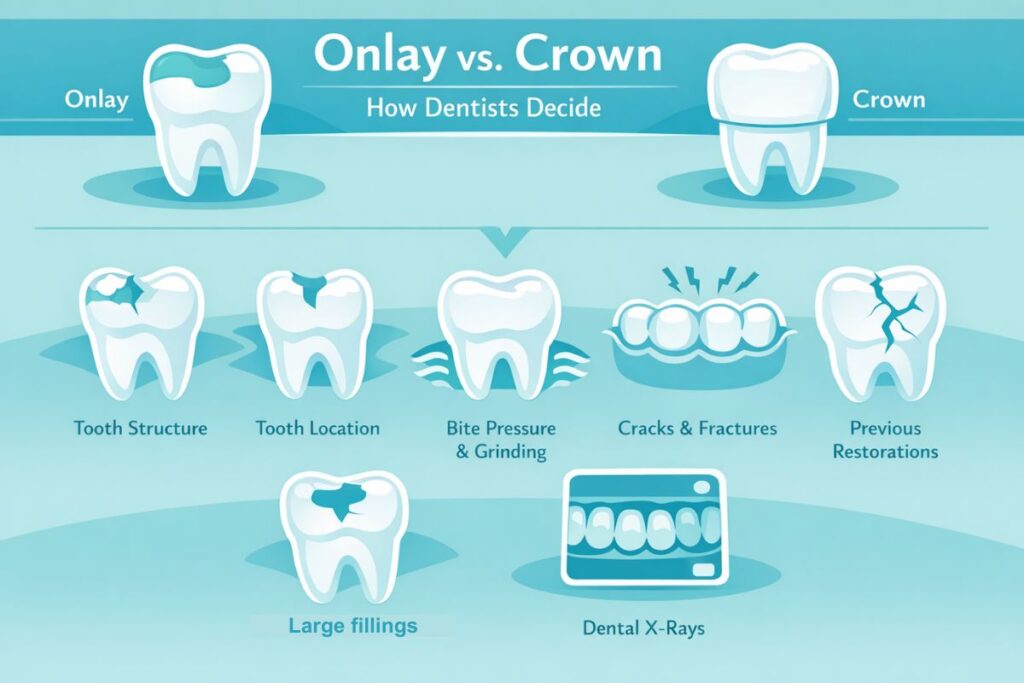
Dentists evaluate several factors when determining which restoration is appropriate.
The amount of remaining tooth structure is one of the most important considerations. If enough healthy enamel remains, an onlay may be sufficient. However, when a large portion of the tooth is damaged, a crown may provide better long-term stability.
The location of the tooth also matters. Molars experience higher chewing pressure, which may influence the choice of restoration.
Bite pressure is another factor. Patients who grind or clench their teeth may benefit from restorations that provide greater structural protection.
Dentists also examine the presence of cracks or fractures. Even small cracks can expand under chewing pressure, making full coverage protection necessary.
Previous restorations are considered as well. Teeth that already contain large fillings may require stronger reinforcement to prevent further damage.
To make the best recommendation, dentists evaluate dental X-rays, the strength of the remaining tooth structure, and the long-term stability of the restoration.
Signs You May Need an Onlay or Crown
Several symptoms may indicate that a tooth requires restorative treatment.
Common signs include:
- Large cavity
- Broken filling
- Cracked tooth
- Pain when chewing
- Tooth sensitivity
- Weak or worn tooth
These symptoms often develop gradually. A tooth with structural damage may feel sensitive when biting down or when exposed to hot and cold foods.
Some patients notice discomfort while eating at Howell’s popular local spots or during everyday meals with family. In other cases, the damage may not cause pain until the tooth becomes more severely weakened.
Early evaluation allows dentists to identify problems before they worsen and recommend appropriate restorative treatment.
How to Care for Onlays and Crowns
Proper care helps restorations remain functional for many years.
Helpful habits include:
- Brush twice daily
- Floss around restoration
- Avoid biting hard objects
- Use a nightguard if grinding
- Visit the dentist regularly
Brushing and flossing help prevent plaque buildup around the restoration, which protects the surrounding tooth structure.
Patients who grind their teeth at night may benefit from a nightguard. This appliance reduces pressure on restorations and helps extend their lifespan.
Regular dental checkups allow dentists to monitor restorations and identify any potential issues early.
With consistent care, both onlays and crowns can continue protecting teeth for many years.
Both restorative treatments provide valuable protection for damaged teeth. Onlays are ideal when the tooth still has enough healthy structure to support a partial restoration. Crowns provide stronger protection when the tooth has significant structural loss.
The right treatment depends on the condition of the tooth, chewing pressure, and long-term stability. A thorough dental evaluation helps determine which option will provide the most reliable outcome.
Patients in Howell who are experiencing tooth damage or discomfort can schedule a consultation with Riverpark Dental of Howell to discuss the most appropriate restoration for their needs. Early care helps protect teeth, restore comfort, and support long-term oral health.
People Also Ask
1. Are crowns stronger than onlays?
Crowns generally provide greater structural reinforcement because they cover the entire tooth. This full coverage helps protect teeth that have been weakened by large cavities, fractures, or extensive previous restorations.
2. How many dental visits are needed for these restorations?
Most onlays and crowns require two appointments. During the first visit, dentists prepare the tooth and take impressions, while during the second visit they place the custom restoration after the lab fabricates it.
3. Can a crown help save a severely damaged tooth?
Yes. Crowns are often used to protect and restore teeth that have significant structural loss. By covering the entire tooth, they provide stability and help prevent further damage.
4. Are crowns noticeable when smiling?
Modern crowns are designed to look natural. Materials such as porcelain and zirconia mimic the color and translucency of natural enamel, helping the restoration blend with surrounding teeth.
5. Are crowns suitable for back teeth?
Yes. Crowns are commonly used for molars because they provide the strength needed to withstand heavy chewing pressure.