4034 US-9 Howell, NJ 07731
Missing a front tooth can cause not only physical discomfort but also emotional distress. After all, your smile is one of your most important features, and having a missing tooth can impact your confidence. The good news is that effective solutions are available to restore your smile and improve both function and appearance. But how do you know which treatment is right for you?
In this blog post, we’ll explore the differences between dental bridges and implants and help you understand which option might be best suited to your needs. We’ll also discuss how these solutions can help restore your smile and provide a long-lasting, natural-looking result.
The Case for Replacing Missing Teeth
Losing a front tooth can be disheartening, but it’s important to address the gap in your smile as soon as possible. Missing teeth not only affect your appearance, but they can also lead to other dental issues. When there’s a gap, nearby teeth may shift, leading to misalignment. Additionally, the bone in the area where the tooth is missing may begin to shrink, altering your facial structure over time.
Both dental bridges and implants are effective ways to replace missing teeth and restore both form and function. Let’s see how they do the job.
Single Tooth Implants: The Gold Standard for Tooth Replacement
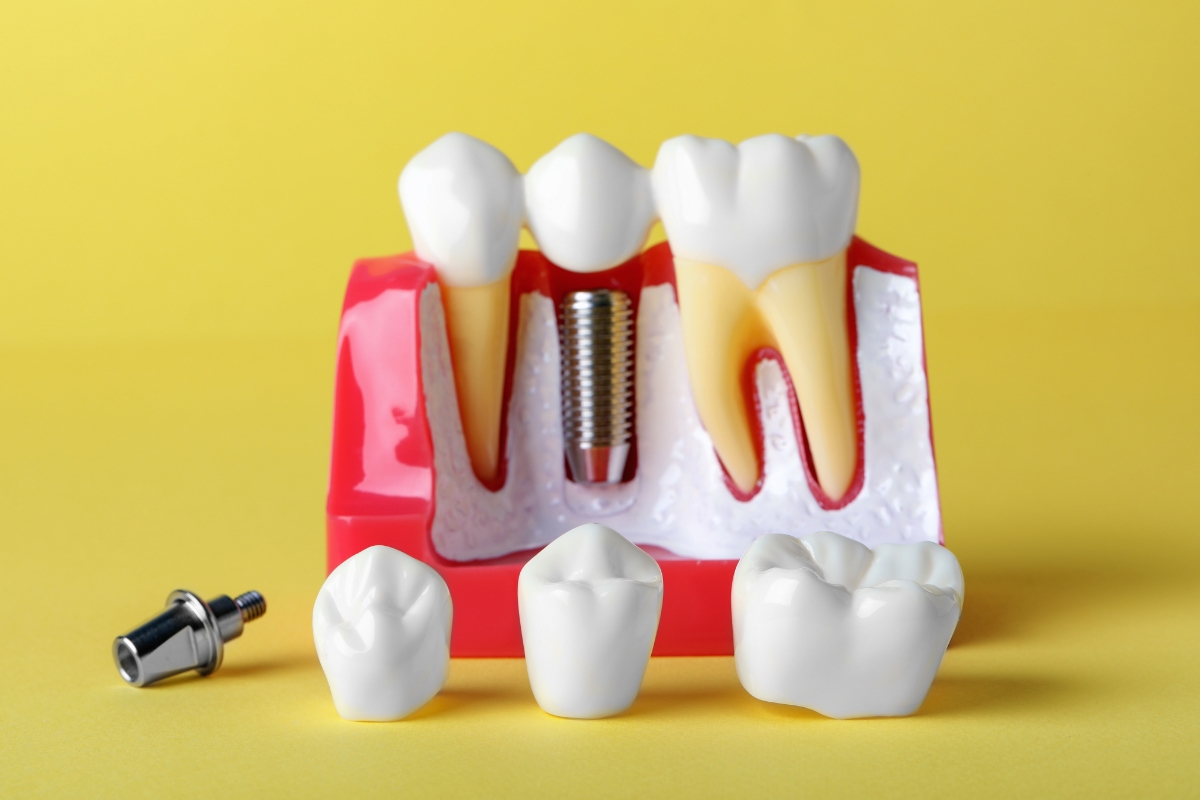
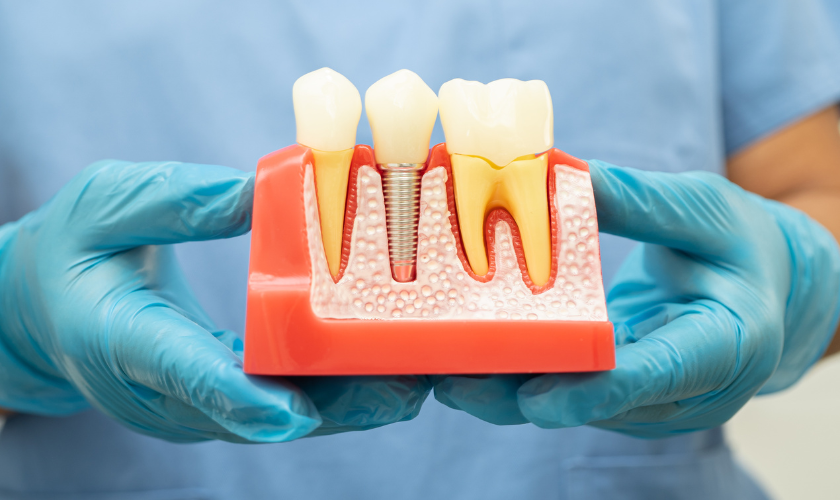
Dental implants have become the go-to solution for replacing missing teeth due to their long-lasting, natural look and feel. An implant is essentially a titanium post surgically placed in the jawbone, serving as the tooth’s root. After a period of healing, a crown is placed over the implant to complete the restoration.
Why choose an implant?
- Durability: Implants can last a lifetime if you take the right care of them.
- Bone Preservation: Since implants are anchored in the jawbone, they help prevent bone loss that often occurs when a tooth is missing.
- Natural Look and Feel: Once placed, the crown on the implant mimics the appearance and function of a natural tooth.
- No Impact on Adjacent Teeth: Unlike bridges, implants don’t require altering neighboring teeth, preserving their integrity.
How Does the Process Work?
- Initial Consultation: Dr. Husney will assess your oral health and determine if you’re a good candidate for an implant. This includes examining your jawbone density, as sufficient bone is required for the implant to be anchored properly.
- Surgical Placement: The implant is placed into the jawbone under local anesthesia.
- Healing Period: The implant may take 3 to 6 months to fuse with the bone, a process called osseointegration.
- Placement of the Crown: After healing, a custom crown is placed on top of the implant to match the color and shape of your surrounding teeth.
At Riverpark Dental, we focus on providing a comfortable experience and ensuring you feel supported throughout the entire process.
Dental Bridges: A Quick, Non-Surgical Solution
A dental bridge is another option for replacing a missing tooth, though it works differently from an implant. A bridge involves creating a false tooth that is supported by adjacent natural teeth, also known as abutment teeth. This restoration is ideal for patients who may not be candidates for implants due to certain health or bone concerns.
Why choose a bridge?
- Faster Solution: A bridge can be placed more quickly than an implant, which requires several months for healing.
- Less Invasive: The bridge procedure is less invasive because it doesn’t require surgery or osseointegration.
- Restores Function: A dental bridge restores proper chewing and speaking while filling the gap left by a missing tooth.
How Does the Process Work?
- Initial Consultation: Dr. Husney will examine your teeth to determine if a bridge is the right option for you.
- Preparation of the Abutment Teeth: The teeth on either side of the gap are prepared by removing a small amount of enamel to allow for the placement of the crowns that will hold the bridge.
- Creating the Bridge: Impressions of your teeth are taken to create a custom bridge that fits comfortably and securely in your mouth.
- Final Placement: After the bridge is crafted, it’s cemented into place to restore both appearance and function.
Bridges are a great option for those looking for a non-surgical solution with quicker results. However, it’s essential to keep in mind that the adjacent teeth must be healthy enough to support the bridge, and they may be slightly altered during the procedure.
Which Option Is Right for You?
The decision between dental implants and bridges depends on several factors, including your overall oral health, the condition of your adjacent teeth, and your long-term goals. Intrigued to know more? Let’s unwrap them:
- Bone Health: Implants require sufficient bone structure, whereas bridges rely on the strength of your natural teeth.
- Longevity: Implants generally last longer than bridges, and some can last a lifetime if well cared for.
- Aesthetics: Both options provide natural-looking results, but implants tend to feel more like natural teeth due to their stability and integration with the bone.
- Cost and Time: Bridges are often more affordable upfront and can be completed more quickly, but implants may offer a better return on investment over time.
Dr. Husney’s advice? If you have a healthy jawbone and want a long-term solution that closely mimics your natural tooth, a single tooth implant may be the ideal choice. However, if you’re looking for a quicker, more cost-effective solution, a dental bridge may be the way to go.
Contact Riverpark Dental of Howell today to schedule a consultation with Dr. Husney and explore your options for replacing a missing tooth.
People Also Ask
1. How long does it take to recover from a dental implant?
It typically takes several months for the implant to fuse with the jawbone. However, the crown can be placed within a few months after surgery, and most patients report minimal discomfort after the procedure.
2. Are dental implants painful?
The procedure itself is performed under local anesthesia, so you won’t feel pain during the surgery. Some mild discomfort or swelling may occur during the healing process, but this can be managed with over-the-counter pain relievers.
3. Can a dental bridge replace multiple teeth?
Yes! A bridge can replace multiple missing teeth in a row. It’s a versatile option for many patients.
4. How long do dental bridges last?
With proper care, dental bridges typically last 10 to 15 years. However, they may require maintenance or replacement as the supporting teeth wear down.
5. Is one option better for my smile?
Both implants and bridges offer excellent aesthetic results, but implants tend to provide a more stable and long-lasting solution. Dr. Husney will work with you to determine which option best fits your smile.